



From our perspective, the U.S. retail real estate sector has entered 2026 with resilient fundamentals and growing investor interest. Driven by changing demographics, consumer habits, and limited new supply, we see retail evolving into a stable and strategic component for long-term strategies.
Macro Forces Shaping Retail Performance
The labor market’s pace of growth has slowed due to demographic shifts, such as an aging population, resulting in the labor force growing at just 0.8% since 2008, half the rate of previous decades.1 Consumer spending continues to grow, however, much of this growth is fueled by increased credit use and declining savings rates. We hold the view that current economic pressure means necessity-driven retailers (Whole Foods, Aldi, Walgreens) are positioned to outperform discretionary focused (Nordstrom, Crate & Barrel, Nike) spending.
E-Commerce vs. Brick-and-Mortar: Complementary Channels
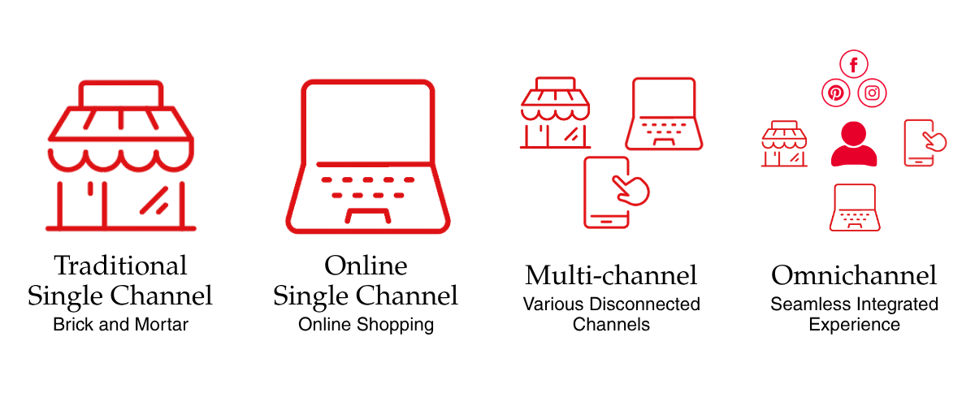
E-commerce accounts for nearly 24% of total retail sales, excluding auto, gas, and food services.2 We believe e-commerce will continue to expand as younger generations’ purchasing behavior becomes an increasingly larger part of the market. New digital forces, like AI-powered personal assistants, are changing consumer behavior, making online shopping even more seamless and personalized. Despite this, we believe the need for physical retail locations should remain strong, as they will continue to serve as fulfillment centers, return hubs, brand touchpoints and places to socialize.
Most consumer brands now combine both physical and online strategies, creating omnichannel experiences that are likely to support continued retail leasing momentum. For example, brands like Warby Parker and Vuori have expanded from online-only to opening brick-and-mortar locations to connect directly with customers. Warby Parker now operates over 200 stores and achieved a 24% increase in sales in 2024 compared to the previous year.3 An omnichannel approach allows brands to reach customers wherever they shop, building stronger relationships and boosting both convenience and loyalty.
Consumer Spending
Retail spending patterns reveal that motor vehicles (19%), non-store retailers (17%), food & beverage (14%), general merchandise (11%), and grocery (11%) drive total sales.4 Over the past 25 years, the most significant growth has been in e-commerce and food & beverage. Health and wellness is another contender evidenced by 84% of U.S. consumers who say wellness is a top or important priority.5 Fitness studios, urgent care, dental, optometry, med spas, and personal care are non-replicable online and generally produce long-term lease commitments driving sustained demand.
Grocery: A Resilient Foundation
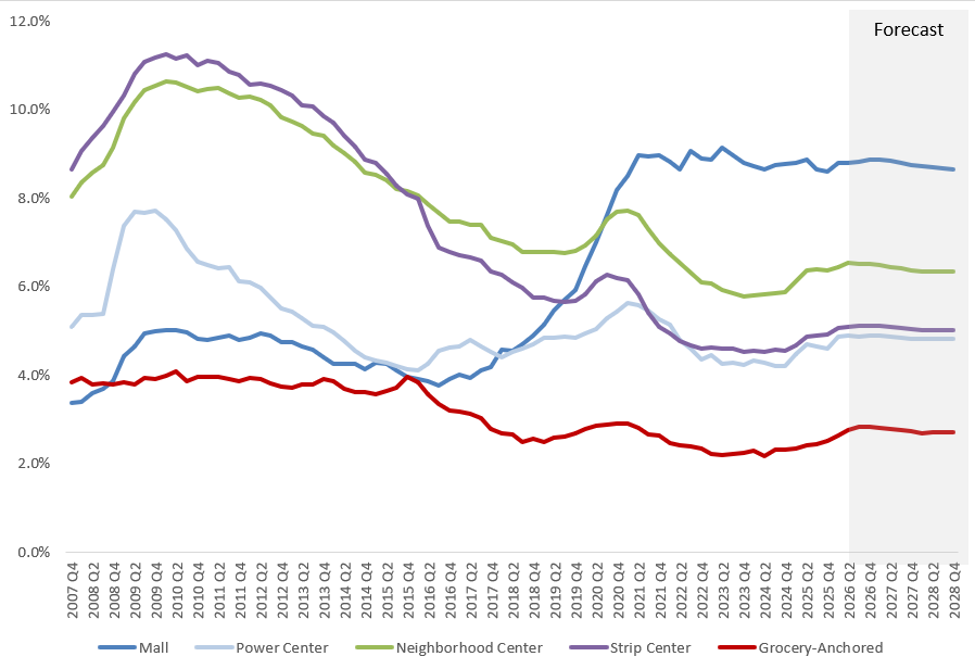
We maintain that grocery stores anchor the retail sector with unmatched stability. In 2025 alone, total U.S. grocery store sales hit $915 billion, a 2.8% year-over-year increase.6 We see grocery remaining a recession-resilient retail category due to the non-discretionary nature of nutrition. Grocery-anchored centers now boast exceptionally low vacancies, limited new supply, and a growing demand from an aging population that spends a higher share of their budget on food and pharmacy.
Vacancy Rates Across U.S. Retail Sub-Sectors7
Sector Fundamentals
We find retail fundamentals remaining highly favorable, driven by a prolonged lack of new supply that continues to limit available space and push vacancy to a sector low at 4.3%.8 Construction remains constrained as costs outpace rent growth, keeping new development largely unfeasible and reinforcing tight market conditions. At the same time, pricing has stabilized, with cap rates holding steady and transaction activity increasing, reflecting growing investor confidence. Together, we see low supply, low vacancy, and steady pricing creating a more predictable and attractive environment for retail real estate.
The retail sector’s outlook for 2026 is defined by demand for necessity-driven tenants, record low vacancies, stable rent growth, and institutional re-engagement. The combination of these factors make the retail sector, in our view, an attractive strategy in the coming years.
1 Fred PAYEMS
2 Census.gov Retail Trade
3 https://www.trendtrack.io/blog-post/top-dtc-brands & https://www.icsc.com/news-and-views/icsc-exchange/where-do- digitally-native-brands-stand-among-tenants-competing-for-space
4 Census.gov Monthly Sales for Retail and Food Services
5 https://www.mckinsey.com/industries/consumer-packaged-goods/ our-insights/future-of-wellness-trends
6 Census.gov Grocery Stores & BLS.gov Consumer Price Index
7 CoStar - *Past performance is not a guarantee of future results
8 CoStar
Retail Sector Review
Download this report to explore key retail trends we believe position the retail sector as a stable, income oriented, and strategically compelling investment opportunity.